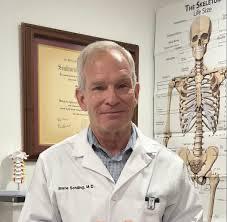
Medically reviewed
Dr. Blane Schilling, MD
Dr. Blane Schilling, MD is a family medicine physician and integrative wellness specialist with 30 years of clinical experience. He reviews medically sensitive articles for medical accuracy, safety context, contraindications, evidence quality, and practical reader risk across supplements, procedures, treatments, and wellness topics.
View full credentials →Clinic photos coming soon
About University of Utah Orthopedics
The University of Utah Orthopaedic Center, a cornerstone of University of Utah Health, stands as a beacon of excellence in musculoskeletal care, research, and education. With a rich history spanning over two decades, the center has established itself as a premier destination for patients seeking advanced orthopedic treatments, including cutting-edge regenerative medicine therapies. Since its inauguration in October 2004, the University Orthopaedic Center has been unwavering in its commitment to a patient-centric approach, a philosophy that has guided its growth and solidified its reputation as a national leader in orthopedics.\n\nThe center's mission is deeply rooted in the pursuit of enhancing the health and well-being of individuals through a tripartite focus on exceptional clinical care, pioneering research, and comprehensive education. This mission is brought to life by a dedicated team of world-class physicians, surgeons, researchers, and support staff who collaborate to provide integrated and personalized treatment plans. The culture at the University Orthopaedic Center is one of compassion, respect, and a relentless drive for innovation. This is evident in every aspect of the patient experience, from the initial consultation to post-treatment rehabilitation. The facility itself was designed with the patient journey in mind, ensuring a seamless and comfortable environment for all who walk through its doors.\n\nThe University of Utah Orthopaedic Center boasts a wide array of specialties, addressing the full spectrum of orthopedic conditions. From sports medicine and joint replacement to spine care and pediatric orthopedics, the center offers a comprehensive suite of services. A key area of expertise lies in regenerative medicine, with a dedicated program for Platelet-Rich Plasma (PRP) and stem cell therapies.
This program reflects the center's commitment to exploring and offering the latest, most promising treatments for joint pain and injuries. The approach to treatment is holistic and multidisciplinary. The team of specialists, including physicians, physical therapists, and other healthcare professionals, work in concert to develop individualized care plans that may include non-operative treatments, minimally invasive procedures, or complex surgical interventions. The ultimate goal is to restore function, alleviate pain, and improve the quality of life for every patient.\n\nThe facilities at the University Orthopaedic Center are state-of-the-art, equipped with the latest diagnostic and therapeutic technologies. The center's location in Salt Lake City's Research Park underscores its commitment to the synergy of clinical care and research. This environment fosters a culture of continuous learning and discovery, where new knowledge is translated into improved patient outcomes. The patient experience is paramount at the University Orthopaedic Center. The center has served over 300,000 patients and has had more than two million patient visits, a testament to the trust and confidence it has earned from the community and beyond. Patients consistently praise the expertise, compassion, and professionalism of the staff, as well as the positive and supportive atmosphere of the center.\n\nIn essence, the University of Utah Orthopaedic Center is more than just a hospital; it is a community of caregivers and innovators dedicated to advancing the field of orthopedics and providing the highest standard of care to every patient. Its legacy of excellence, built over 20 years, continues to shape the future of musculoskeletal medicine in Utah and across the nation.
22+
Years Experience
Clinic Information
Address
590 Wakara Way, Salt Lake City, UT 84108, USA
Phone
+1 (801) 587-7109Hours
Mon-Fri: 8:30am-5:30pm
Sat: Closed
Sun: Closed
Accreditations
High Performing in National Orthopedics Ratings
Treatments Offered
Medical Team
Dan Cushman
MD
Christopher A. Gee
MD, MPH
A. Michael Henrie
DO
Richard W. Kendall
DO
Zachary L. McCormick
MD
Nick Monson
DO
David J. Petron
MD
Brett Toresdahl
MD
Frequently Asked Questions
Stem cell therapy is a regenerative treatment that uses the body's own stem cells to promote healing and reduce pain. At the University of Utah Orthopaedic Center, stem cells are harvested from the patient's bone marrow and then injected into the painful joint, such as the knee or shoulder. The goal is for these stem cells to develop into healthy new tissue, thereby alleviating pain and improving function. This therapy is considered for conditions like osteoarthritis and tendonitis when other treatments have not been effective.
Both PRP (Platelet-Rich Plasma) therapy and stem cell therapy are regenerative treatments that use substances from your own body. PRP therapy involves injecting a concentration of your own platelets, which are rich in growth factors, to reduce pain and inflammation. Stem cell therapy, on the other hand, involves injecting stem cells, which have the potential to develop into new, healthy tissue. While both can be used for similar conditions, the mechanism of action is different. Your doctor at the University of Utah Orthopaedic Center will help you determine which therapy is more appropriate for your specific condition.
Currently, stem cell therapy for most musculoskeletal conditions is not FDA-approved. It is considered an experimental treatment, and research is ongoing to determine its long-term effectiveness and safety. The physicians at the University of Utah Orthopaedic Center will discuss the experimental nature of this treatment with you and ensure you have a clear understanding of the potential risks and benefits.
At the University of Utah Orthopaedic Center, stem cell therapy is primarily used to treat chronic joint pain and inflammation associated with conditions such as osteoarthritis and tendonitis. It is not used for acute injuries like bone fractures or ligament tears. The suitability of stem cell therapy is determined after a thorough evaluation by one of the center's specialists.
The procedure involves two main steps. First, a sample of your bone marrow is taken, usually from your hip bone. This is done under local anesthesia. The bone marrow is then processed in a special machine to concentrate the stem cells. Finally, the concentrated stem cells are injected into the painful joint, also under local anesthesia. The entire process is typically completed in a single visit.
Recovery from stem cell therapy is generally well-tolerated. You may experience some mild pain or swelling at the injection site for a few days. Your doctor will provide specific post-procedure instructions, which may include a period of rest followed by a gradual return to normal activities. Physical therapy may also be recommended to aid in your recovery and enhance the effectiveness of the treatment.
Trust Score
21Get a Free Quote
By submitting, you agree to our privacy policy.